Paintings · Forgery & Fraud
The Biggest Art Painting Scandals
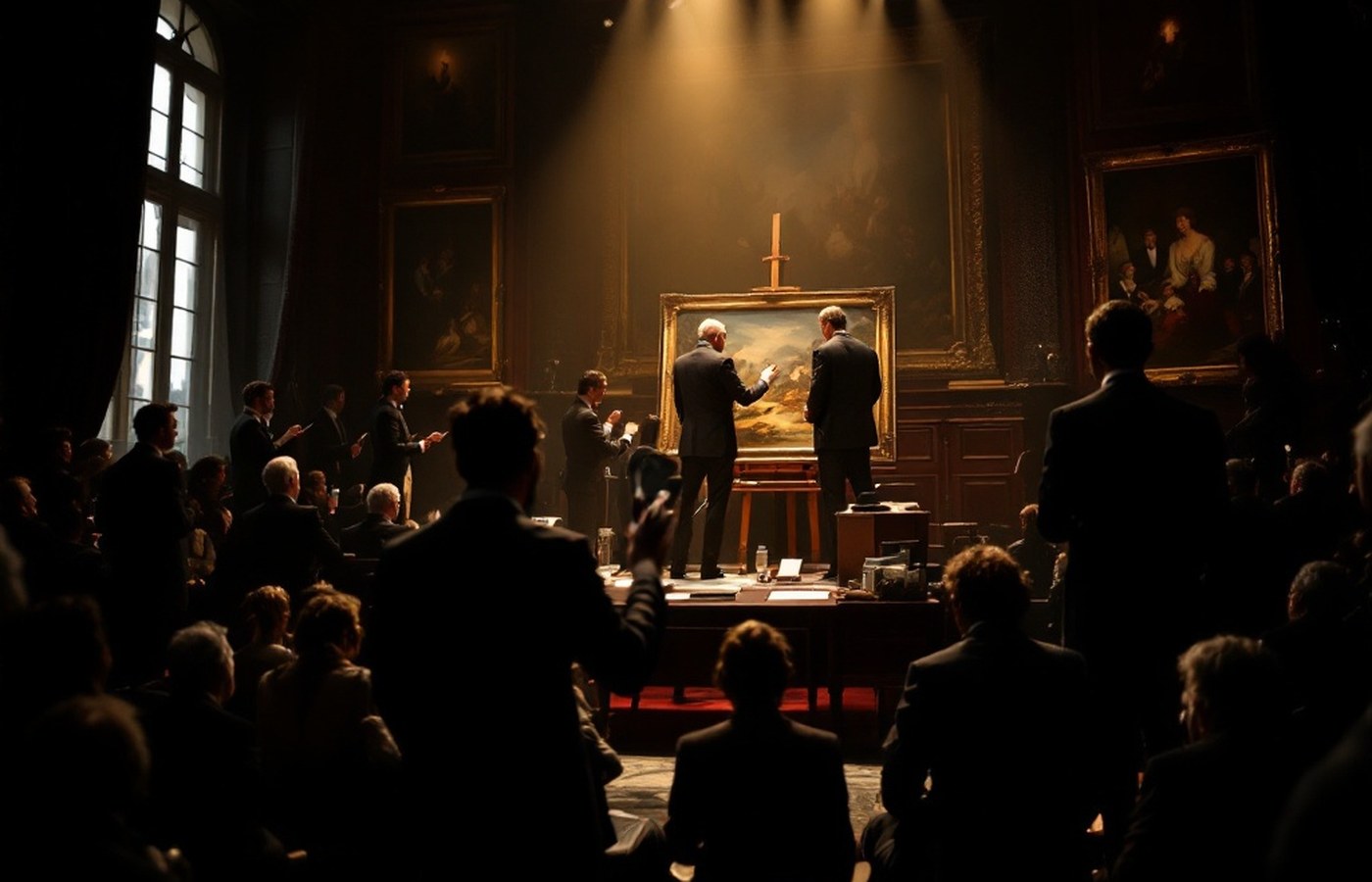
Wherever there is money and beauty, deception is never far behind. The story of art is also, quietly, a story of fakes — of painters skilled enough to fool the greatest experts, and of the scandals that followed when the truth came out. We cannot expect fake-painting scandals to become a thing of the past; but with the era of digitalism, and with authentication methods getting better and better, there is at last a light at the end of the tunnel.
Han van Meegeren
The most famous forger of them all. In the 1930s and 40s, the Dutch painter Han van Meegeren produced "new" Vermeers so convincing that the finest scholars of the day declared them masterpieces. He even sold one to the Nazi leader Hermann Göring. After the war, van Meegeren was arrested for selling a national treasure to the enemy — and, in an astonishing defence, confessed that the "Vermeer" was his own forgery, painting a fresh fake in his cell to prove it.
Wolfgang Beltracchi
Decades later, the German painter Wolfgang Beltracchi ran a similar deception on a grand scale — but instead of copying existing works, he invented entirely new "lost" paintings in the styles of early modern masters, complete with fabricated histories of ownership. His fakes hung in galleries and passed through major auctions for years before a single anachronistic pigment gave the game away.
How the fakes were caught
- A confession — van Meegeren painting a fresh forgery to save his own neck.
- A pigment that did not exist when the painting was supposedly made.
- Paper trails of provenance that, examined closely, led nowhere.
- And, increasingly, the tools of the digital era — imaging, chemistry and data.
Elmyr de Hory
The Hungarian-born Elmyr de Hory spent decades selling forged works attributed to Modigliani, Matisse, Picasso and others to dealers and museums around the world. So prolific was he, and so persuasive, that his life became the subject of a book and a film — and the uncomfortable question of how many of his fakes still hang, unrecognised, on gallery walls.
The Knoedler Gallery Affair
One of the most damaging scandals of recent times brought down one of America's oldest galleries. Over years, the respected Knoedler Gallery in New York sold tens of millions of dollars' worth of previously unknown "masterpieces" by the likes of Rothko and Pollock — all of them, it emerged, painted by a single artist in a garage and supplied through a dealer with an invented story. The gallery closed in disgrace.
What ties these scandals together is not just the skill of the forgers, but our own hunger to believe in a great discovery. The comfort is that science is catching up: pigment analysis, high-resolution imaging and digital databases now make a convincing fake far harder to sustain than it once was. The forgers are not finished — but neither, any longer, are the people who catch them.

Full-time blogger and guidance counsellor. I write Art Inconnu to bring overlooked artists and their work back into the light.